Study in China from Bangladesh
Compare universities, programs, tuition, scholarships, language requirements and student-visa steps for studying in China.
Explore this guide
China at a Glance
Main Intake
September
Teaching Languages
Chinese or English
Long-term Study
X1 Visa
Short-term Study
X2 Visa
After Arrival
Study Residence Permit
Currency
Renminbi (RMB/CNY)
Is China right for you?
Take a realistic look at your profile, budget, and goals before committing to the China process.
This may suit you if...
- You want to compare Chinese- and English-medium programs.
- You are interested in technology, engineering, business, medicine, research or Chinese language.
- You are willing to verify universities and programs carefully.
- You can adapt to different language, digital and cultural environments.
- You can plan tuition and living costs without relying on employment.
Pause and compare if...
- You selected a university only because an agent promised a scholarship.
- Your budget depends on unrestricted part-time work.
- You have not checked the teaching language.
- You are considering medicine without checking Chinese MOE and BMDC requirements.
- You assume admission, scholarship, visa, residence or later employment is automatic.
Why choose China for your studies?
The right choice depends on the exact program, language, university recognition, total cost, city and support—not country reputation alone.

Compare programs and costs thoroughly before applying.
Broad university choice
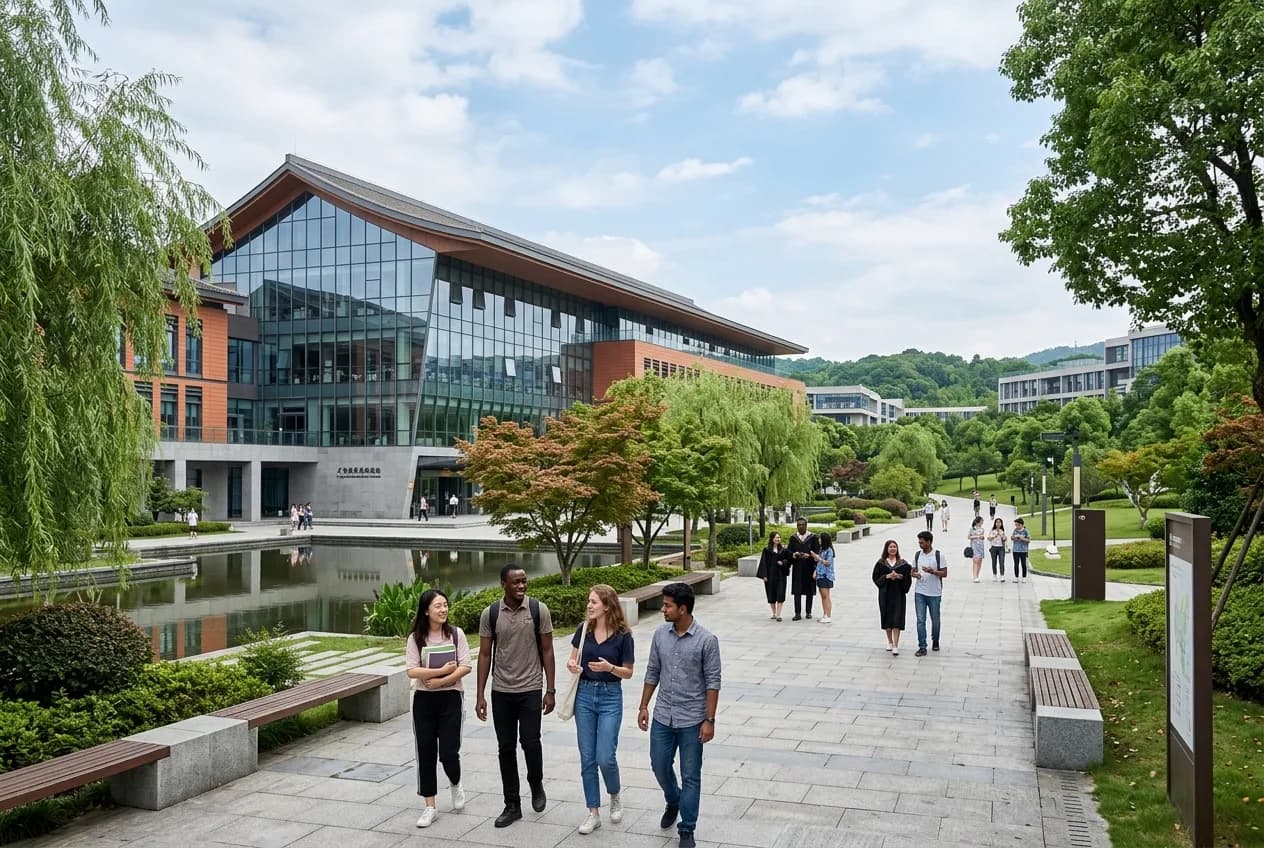
Compare comprehensive universities, specialist institutions, medical universities and research-focused campuses across many regions.
Chinese- and English-medium options
Programs may be taught in Chinese or English, depending on the institution and subject.
Science and technology environment
China offers study and research options across engineering, computing, artificial intelligence, manufacturing, medicine and applied sciences.
Business and regional knowledge
Students can study business, economics, trade, logistics, language and international relations in a major Asian economy.
Scholarship pathways
Students may explore Chinese Government Scholarships, university awards and provincial or municipal funding where eligible.
Distinct student cities
Beijing, Shanghai, Hangzhou, Nanjing, Wuhan, Xi’an, Guangzhou, Shenzhen and other cities offer different academic and cost environments.
Popular Courses and Study Areas
Computer Science and Software Engineering
Study programming, systems design and software development in modern tech hubs.
Artificial Intelligence and Data Science
Explore advanced computing, machine learning and big data applications.
Electrical and Electronic Engineering
Focus on hardware, electronics, power systems and communications.
Mechanical and Manufacturing Engineering
Learn industrial design, robotics and manufacturing processes.
Civil Engineering and Architecture
Study structural engineering, urban planning and large-scale infrastructure.
Business, Economics and International Trade
Gain insights into global supply chains, Asian markets and international commerce.
Medicine and Health Sciences
Study clinical medicine, pharmacy and public health. Ensure BMDC recognition.
Chinese Language and Asian Studies
Deepen your understanding of Chinese linguistics, culture and regional history.
Environmental Science and Renewable Energy
Focus on sustainability, green technology and environmental engineering.
Research and Doctoral Study
Pursue advanced research across sciences, engineering and social sciences.
Application Document Checklist
Important: Required documents differ by individual profile and circumstances. AdmissionArena does not provide legal or migration advice. Always use the official embassy or visa center website to verify your specific visa requirements.
Identity
- Passport
- Photographs
- Personal/contact information
- Family documents where applicable
Academic
- Certificates
- Transcripts
- Grading information
- Certified translations where required
Language and assessment
- HSK where required
- English evidence where required
- University examination/assessment
- Portfolio/interview materials where relevant
University application
- Application form
- Study plan/personal statement
- References
- CV
- Research proposal
- Physical examination documentation where required
Scholarship/financial
- Scholarship application
- Pre-admission document where required
- Funding/sponsor evidence
- Bank statements where required
- Tuition and accommodation plan
Visa and residence
- Admission letter
- JW201/JW202 or current official equivalent where required
- X1/X2 documents
- Passport and visa application
- Health/insurance documents
- Residence-permit documents after arrival
Intakes and Preparation Timeline
Note: These phases serve as a general guide. Processing times for applications, scholarships, and visas vary significantly. Do not treat these as fixed timelines.
Phase 1: Research
- Research universities and check program language (English vs. Chinese).
- Review scholarship options and requirements.
- Plan language tests and verify degree recognition.
Phase 2: Prepare & Apply
- Prepare academic records and HSK/English evidence.
- Contact supervisors where relevant (for postgraduates).
- Review scholarship and university application deadlines.
Phase 3: Acceptance & Scholarship
- Submit university and scholarship applications.
- Complete any required assessments or interviews.
- Verify the final offer and confirm funding conditions.
Phase 4: Visa & Arrival
- Receive official admission documents and apply for X1/X2 visa.
- Arrange travel, housing, and complete arrival registration.
- Complete residence procedures and university insurance.
Indicative Cost of Studying in China
Total costs vary heavily by province, institution, program, and lifestyle. Do not imply that part-time earnings will cover the full cost of studying and living.
Tuition (English Medium)
Tuition (Chinese Medium)
Tuition (MBBS)
Living Costs
Residence Permit & Insurance
Want to estimate your exact costs?
Use our comprehensive Cost of Studying Abroad Calculator to build a personalized budget based on your specific degree, city, and lifestyle choices.
Open Cost CalculatorScholarships for China
Scholarships have specific criteria and deadlines, ranging from Chinese Government Scholarships to university awards.
Chinese Government Scholarship
Administered through the China Scholarship Council (CSC). Program categories (Type A, B, etc.) have specific application requirements and deadlines.
University scholarships
Offered directly by institutions to attract international talent. Coverage varies significantly from partial tuition waivers to full support.
Provincial or municipal scholarships
Funded by local governments to support students studying in specific regions or cities.
Graduate/research funding
Dedicated support for master's and doctoral students, often tied to specific research projects or academic departments.
Are you eligible for a scholarship?
Use our Scholarship Checker to find funding opportunities matching your academic profile.
Examples of established Chinese universities
China is home to world-class institutions across the country. Here are some established universities known for their academic excellence.
Tsinghua University
Engineering, Science, Business, Architecture
Peking University
Humanities, Social Sciences, Medicine, Science
Zhejiang University
Engineering, Medicine, Agriculture, Arts
Fudan University
Medicine, Business, Humanities, Science
Shanghai Jiao Tong University
Engineering, Medicine, Science, Business
Nanjing University
Science, Humanities, Engineering, Environmental Studies
Find Your Ideal Institution
Research universities carefully regarding language medium, rankings and specific scholarship offerings.
Student Cities in China
China's diverse cities offer different lifestyles, living costs, and opportunities. Choose a location that matches your career goals and budget.
Beijing
The political and cultural center, home to China's top universities and major tech hubs.
Shanghai
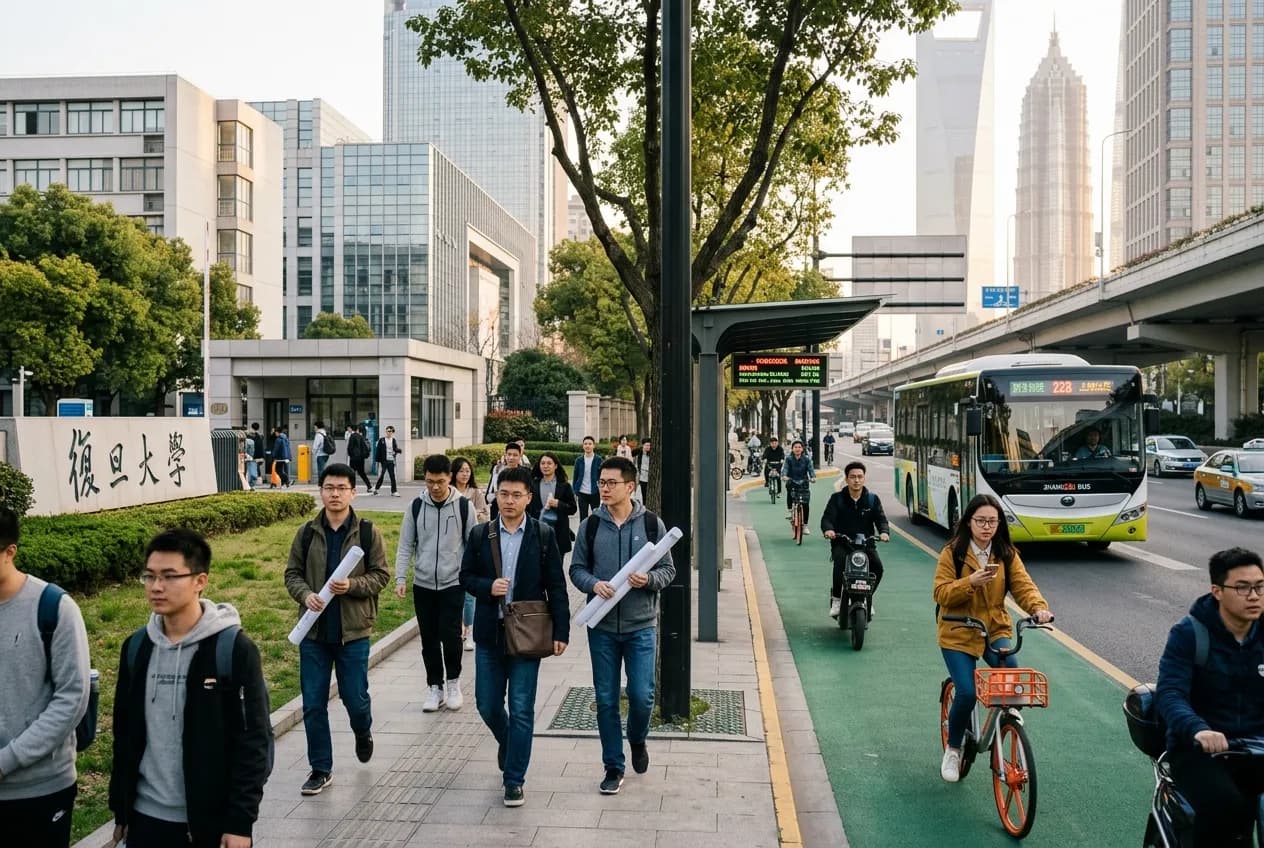
A global financial center with a highly international environment and numerous multinational companies.
Hangzhou
Known for its tech industry and scenic beauty, offering a strong mix of innovation and culture.
Guangzhou
A major manufacturing and trading hub in southern China, ideal for business and trade studies.
Work Rules for Students
No unrestricted employment
International students do not have unrestricted permission to take ordinary employment or operate a business while studying.
Approved work-study
Permitted work-study activity must follow university and official rules.
Off-campus internship
An off-campus internship requires university approval and the relevant information recorded through the local exit-entry authority.
Residence-permit annotation
Students should not begin paid work or an internship until the required authorization and residence-permit formalities are complete.
Warning: Do not rely on part-time employment to pay tuition or living costs. Unauthorized work can affect immigration status and future applications.
Health Insurance and Student Support
Medical insurance
Universities and scholarship programs may require comprehensive medical insurance. Confirm coverage and enrollment directly.
Physical examination
Long-term study and residence procedures may require official health documentation or local verification.
University support
International offices may assist with registration, residence procedures, orientation and student services.
Emergency and additional care
Coverage, exclusions, hospital access and additional charges vary.
Always arrange health insurance before arriving in China.
Post-Study Planning
Graduation does not automatically authorize employment. Students should check current NIA and work-permit rules.
Many graduates choose to pursue advanced degrees in China or globally. Ordinary employment requires appropriate work authorization, with employer, qualification and experience requirements applying.
Opportunities may exist for post-doctoral or specialized academic positions for highly qualified graduates. Note that no automatic permanent residence follows from study. Student residence status is not a work permit.
Verify latest regulations
China's employment and residence policies are subject to updates. Please refer to official sources.
Frequently Asked Questions
Essential information for Bangladeshi students planning to study in China.
Is it mandatory to learn Chinese to study in China?
Can Bangladeshi students work part-time in China?
Are Chinese MBBS degrees recognized in Bangladesh?
What is the difference between an X1 and X2 visa?
Check official information
Study visa rules, scholarship eligibility, and requirements can change. Confirm the latest information through official sources below.
Ready to Start?
Book a consultation to discuss your Chinese study plans.