Study in Japan from Bangladesh
Compare universities, tuition, MEXT scholarships, language requirements (EJU/JLPT), student visa steps, and part-time work rules for studying in Japan.
Explore this guide
Japan at a Glance
Main Intakes
April, October
Teaching Languages
Japanese or English
Pre-visa Requirement
Certificate of Eligibility (COE)
Visa Application via
VFS Global Dhaka
Status of Residence
Student
Currency
Japanese Yen (JPY/¥)
Is Japan right for you?
Take a realistic look at your profile, budget, and goals before committing to the Japan process.
This may suit you if...
- High-quality education and research facilities
- Safe and welcoming environment for international students
- Strong job market, especially in engineering and IT
- Generous government (MEXT) and university scholarships
- Rich cultural experience combining tradition and modern technology
Pause and compare if...
- Japanese language proficiency is highly advantageous for daily life
- High living costs in major cities like Tokyo and Osaka
- Strict cultural norms and work ethics can be difficult to adapt to
- Complex visa processes and paperwork for part-time jobs
- Limited fully English-medium undergraduate programs
Why choose Japan for your studies?
The right choice depends on the exact program, language readiness, university recognition, total cost, city, and post-study goals—not country reputation alone.

Compare programs and costs thoroughly before applying.
World-class education
Compare national, public, and private universities known for high academic standards and cutting-edge facilities.
English-taught programs
While Japanese is dominant, universities increasingly offer full degree programs taught entirely in English (Global 30 network and others).
Science & Engineering Hub
Japan offers exceptional study and research options across robotics, engineering, IT, manufacturing, and applied sciences.
Strong employment prospects
Japan faces a demographic shift and actively seeks international talent, offering structured pathways from graduation to employment.
MEXT & JASSO Scholarships
Eligible students can explore the prestigious Japanese Government (MEXT) Scholarships and various JASSO tuition reduction programs.
Safe and culturally rich cities
Tokyo, Kyoto, Osaka, Fukuoka, and Hokkaido offer incredibly safe environments blending deep tradition with hyper-modernity.
Popular Courses and Study Areas
Engineering & Technology
Robotics, automotive engineering, civil engineering, electronics, and materials science.
Natural Sciences & Research
Physics, chemistry, biological sciences, and environmental studies at leading research institutes.
IT & Computer Science
Artificial intelligence, software engineering, information systems, and data science.
Business & Economics
International management, economics, finance, and global MBA programs taught in English.
Humanities & Japanese Studies
Japanese language, literature, international relations, sociology, and cultural studies.
Design & Arts
Animation, architecture, digital media, fashion, and traditional arts.
Application Document Checklist
Important: Required documents differ by individual profile and circumstances. AdmissionArena does not provide legal or migration advice. Always use the official embassy or VFS Global website to verify your specific visa requirements.
Academic & Identification
- Valid Passport (at least 6 months validity)
- Academic transcripts and certificates (attested by Education Board and MOFA)
- Recent passport-size photographs (strict dimensions apply for Japan)
- Certificate of Eligibility (COE) issued by Japanese Immigration
Language & Admissions
- University Acceptance Letter or Admission Certificate
- EJU score report (if applying to Japanese-medium undergraduate programs)
- JLPT Certificate (N5/N4 to N1 depending on the program)
- IELTS/TOEFL/Duolingo scores (for English-taught programs)
Financial & Visa Support
- Completed Visa Application Form
- Financial Guarantor's documents (bank statements, tax returns, employment letters)
- Statement of Purpose / Study Plan detailing post-study goals
- MEXT Scholarship Certificate (if applicable)
Intakes and Preparation Timeline
Note: These phases serve as a general guide. Processing times for applications, scholarships, and Certificate of Eligibility (COE) vary significantly. Do not treat these as fixed timelines.
Phase 1: Research
- Research universities and check language requirements (JLPT/EJU).
- Explore MEXT and JASSO scholarship opportunities.
- Start learning basic Japanese language.
Phase 2: Prepare & Apply
- Prepare academic documents and translation if necessary.
- Take EJU, JLPT, IELTS or TOEFL exams as required.
- Submit university applications before deadlines.
Phase 3: Acceptance & Scholarship
- Receive conditional or unconditional offer letters.
- Apply for university-specific or private scholarships.
- Pay initial tuition fees to secure admission.
Phase 4: COE & Visa
- University applies for Certificate of Eligibility (COE) on your behalf.
- Apply for student visa at the Embassy using the COE.
- Book flights and arrange accommodation in Japan.
Indicative Cost of Studying in Japan
Total costs vary heavily by prefecture, institution, program, and lifestyle. Do not imply that part-time earnings will cover the full cost of studying and living.
National Universities
Private Universities
Living Costs
Want to estimate your exact costs?
Use our comprehensive Cost of Studying Abroad Calculator to build a personalized budget based on your specific degree, city, and lifestyle choices.
Open Cost CalculatorScholarships for Japan
Scholarships have specific criteria and deadlines, ranging from MEXT (Monbukagakusho) Scholarships to JASSO honors and university-specific awards.
MEXT Scholarship (Embassy/University Track)
Fully funded scholarship covering tuition, monthly stipend (approx. ¥117,000 - ¥145,000), and round-trip airfare. Highly competitive.
JASSO Honors Scholarship
Monthly stipend of ¥48,000 for privately financed international students with excellent academic and character records.
University-Specific Scholarships
Tuition fee exemptions or reductions (30%-100%) and stipends offered directly by national and private universities.
Local Government & Foundation Scholarships
Various scholarships offered by local governments (e.g., Tokyo, Rotary Club) and corporate foundations. Often applied for after arrival.
Are you eligible for a scholarship?
Use our Scholarship Checker to find funding opportunities matching your academic profile.
Examples of established Japanese universities
Japan is home to world-class institutions across the country. Here are some established universities known for their academic excellence.
The University of Tokyo
Research, Engineering, Sciences
Kyoto University
Fundamental Research, Nobel Laureates
Osaka University
Robotics, Immunology, Engineering
Tohoku University
Materials Science, Physics
Waseda University
Political Science, Business, Global Programs
Find Your Ideal Institution
Research universities carefully regarding language medium, rankings, and specific scholarship offerings.
Student Cities in Japan
Japan's diverse cities offer different lifestyles, living costs, and opportunities. Choose a location that matches your career goals and budget.
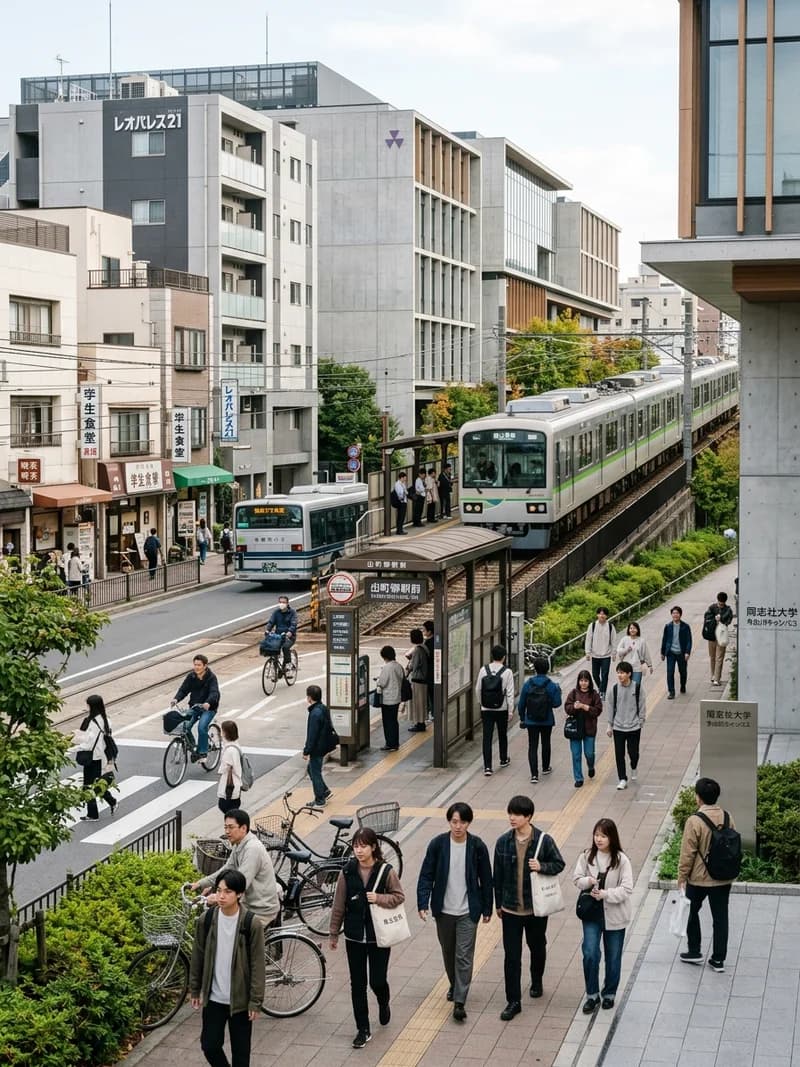
Tokyo
The political and cultural center, home to Japan's top universities and major tech hubs.
Kyoto
The ancient capital, known for deep culture, student-friendly environment, and academic prestige.
Osaka
A vibrant economic hub, offering slightly lower living costs than Tokyo with great opportunities.
Fukuoka
A growing startup hub in western Japan, famous for high quality of life and accessibility.
Work Rules for Students
Part-time Work Hours
Up to 28 hours per week during the semester, and up to 40 hours during long vacations.
Permission Required
Must obtain 'Permission to Engage in Activity other than that Permitted under the Status of Residence' before working.
Working without permission or exceeding the hour limit can lead to deportation.
Health Insurance and Student Support
National Health Insurance
Mandatory for all international students, covers 70% of medical costs.
International Student Support
Most universities have dedicated international student support desks for academic and personal issues.
Always keep your Residence Card (Zairyu Card) with you at all times.
Post-Study Opportunities
Japan offers excellent opportunities for international graduates to find employment, especially in engineering, IT, and global business sectors.
Students can change their visa status from 'Student' to a working visa (e.g., 'Engineer/Specialist in Humanities/International Services') upon finding a job.
Job Hunting Support
Many universities offer robust job hunting (Shuukatsu) support starting from the 3rd year of undergraduate studies.
Frequently Asked Questions
Essential information for Bangladeshi students planning to study in Japan.
Is knowing Japanese required to study in Japan?
What is the EJU exam?
Can Bangladeshi students work part-time in Japan?
Is the MEXT scholarship available for Bangladeshi students?
Check official information
Study visa rules, scholarship eligibility, and requirements can change. Confirm the latest information through official sources below.
Ready to Start?
Book a consultation to discuss your Japanese study plans.