Study in the USA from Bangladesh
Compare universities, test requirements, funding options, and the F-1 visa process. Build a realistic plan based on your academic background and budget.
Explore this guide
USA at a Glance
Main intakes
Fall (Aug/Sep), Spring (Jan), and varied starts
Primary study visa
F-1 student visa for eligible academic study
School verification
SEVP-certified schools
Admission document
Form I-20 after eligible admission and financial requirements
Work while studying
Generally up to 20 hours/week for authorized on-campus work while school is in session, Conditions apply
Currency
U.S. dollar (USD)
Is USA right for you?
Take a realistic look at your profile and goals before committing to the USA process.
This may suit you if...
- You want flexibility across majors, electives and institution types
- You are prepared to compare total costs rather than tuition alone
- You want access to research, practical learning or broad academic choice
- You can explain a logical connection between the program and your goals
- You are ready to plan applications and funding well in advance
Pause and compare if...
- Your budget depends on unauthorized or uncertain employment
- You assume admission automatically results in an F-1 visa
- You selected an institution without checking SEVP certification and academic fit
- You expect scholarships or assistantships to be guaranteed
- You are choosing solely because of immigration expectations
Why choose the USA for your studies?
Explore the academic flexibility, research environment and range of study pathways that attract students to the United States.
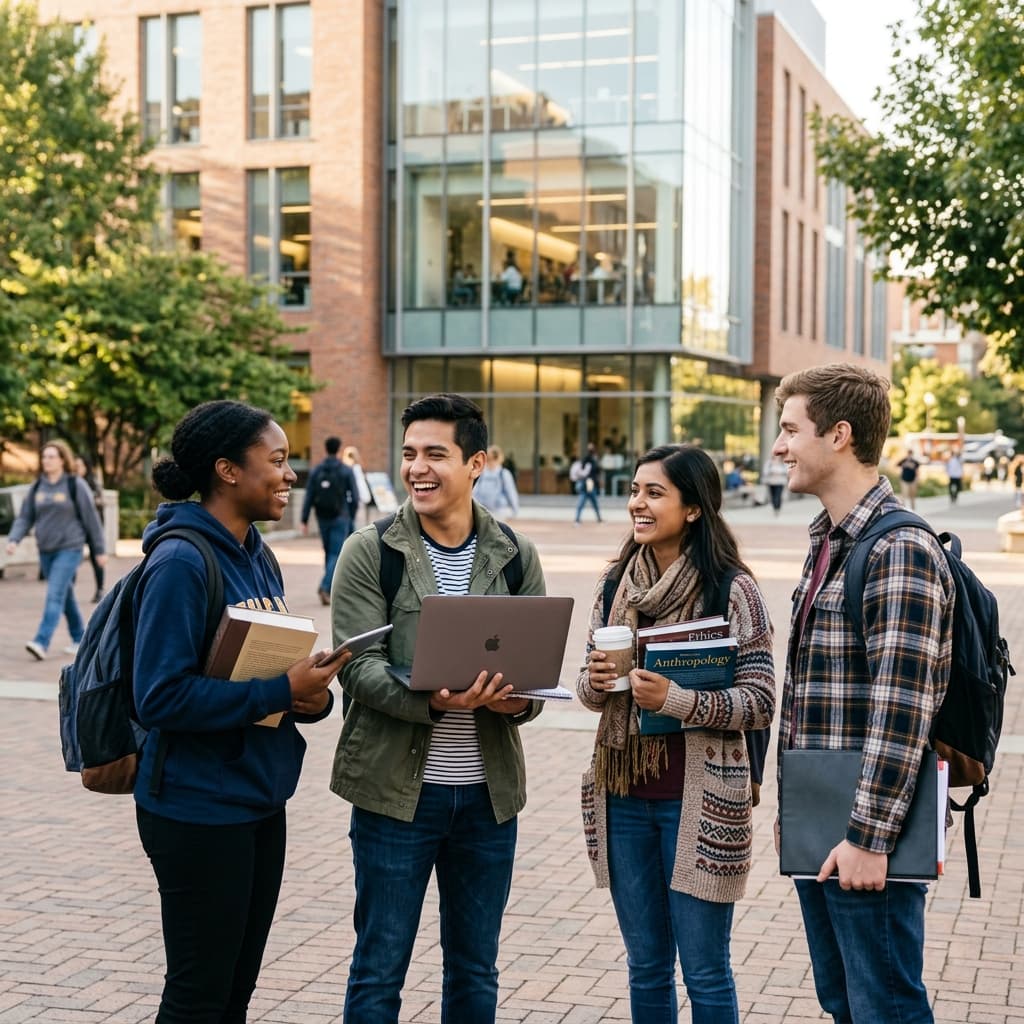
The right choice depends on academic fit, total cost and the support available at each institution.
Academic choice
A wide range of institution types, majors and program structures
Flexible pathways
Four-year degrees, community-college transfer routes and graduate study
Research and innovation
Opportunities across laboratories, research centers and applied projects
Interdisciplinary learning
Students may combine subjects or explore electives where programs permit
Campus and career development
Academic advising, student organizations and career services vary by institution
Regional variety
Different climates, industries, lifestyles and cost environments across the country
Popular Courses and Study Areas
Computer Science and Software
Top-ranked programs in software engineering, programming, and tech innovation.
Data Science and Artificial Intelligence
Machine learning, AI research, and big data analytics.
Engineering
Mechanical, electrical, aerospace, and civil engineering.
Business and Management
MBA programs, finance, and global business strategies.
Finance and Economics
Financial modeling, quantitative economics, and corporate finance.
Health and Life Sciences
Biology, biotechnology, and pre-med pathways.
Public Health
Epidemiology, global health policies, and healthcare administration.
Media and Communication
Journalism, digital media, and public relations.
Environmental Science
Sustainability, climate policy, and environmental engineering.
Research and Doctoral Study
Intensive PhD programs with research assistantship opportunities.
Turn your subject interests into a realistic shortlist
Check your admission profile and expected study costs before deciding which U.S. programs and institutions to explore.
Financial & Application Document Checklist
Important: Required documents differ by individual profile and institution requirements. AdmissionArena does not provide legal or immigration advice. Always verify your specific requirements using the official U.S. Department of State (travel.state.gov) and U.S. Embassy in Dhaka portals.
Identity
- Valid passport
- Current contact and biographical information
- Dependant identity documents where applicable
Academic records
- Certificates
- Transcripts
- Certified translations where required
- Grading-scale information where requested
Testing
- English-language evidence accepted by the institution
- SAT/ACT only where required or useful
- GRE/GMAT only where required
- Professional/program tests where applicable
Application
- Essays or statement of purpose
- Recommendations where required
- CV/résumé for relevant programs
- Portfolio/research proposal where applicable
- Application fee or approved waiver where available and permitted
Financial evidence
- School financial-certification form where required
- Bank or sponsor evidence
- Scholarship/assistantship letter where applicable
- Evidence matching the institution’s estimated cost of attendance
Visa preparation
- Admission from an SEVP-certified school
- Form I-20
- I-901 SEVIS fee receipt
- DS-160 confirmation
- Visa appointment documents
- Additional evidence requested by the embassy
Intakes and Preparation Timeline
Note: These phases serve as a general guide. Processing times for applications and visas vary significantly. Do not treat these as fixed timelines.
Phase 1: Research
- Research institutions and pathways
- Build a realistic budget
- Plan required tests
- Review funding options
Phase 2: Prepare & Apply
- Finalize shortlist
- Prepare essays, recommendations and transcripts
- Take required tests
- Review application and aid deadlines
Phase 3: Acceptance
- Compare total cost and funding
- Accept the selected offer
- Complete financial certification
- Receive Form I-20 where eligible
Phase 4: Visa
- Pay applicable SEVIS fee
- Complete DS-160
- Follow current U.S. Embassy Dhaka appointment process
- Prepare for interview
- Arrange housing, insurance and travel
Indicative Cost of Studying in USA
Total costs vary heavily by location, institution, program, and lifestyle. Programs like Medicine, Dentistry, Veterinary Science, Aviation, and lab-intensive sciences typically cost significantly more. Do not imply that part-time earnings will cover the full cost of studying and living.
Tuition (Public/State Univ)
Tuition (Private Univ)
Living Costs (Estimated)
Health Insurance
SEVIS & Visa Fees
Want to estimate your exact costs?
Use our comprehensive Cost of Studying Abroad Calculator to build a personalized budget based on your specific degree, city, and lifestyle choices.
Open Cost CalculatorScholarships & Assistantships for USA
Scholarships, fellowships, and graduate assistantships are highly competitive.
University merit scholarships
Awarded by individual institutions. Eligibility and amounts vary.
Need-based institutional aid
Available at some institutions. International-student policies vary.
Graduate assistantships
Teaching/research roles may provide a stipend and/or tuition support.
External scholarships
Offered by eligible foundations, organizations or programs.
Are you eligible for a scholarship?
Use our Scholarship Checker to find funding opportunities matching your academic profile.
Established U.S. Universities & Colleges
USA is home to world-class institutions across the country. Here are some established universities known for their academic excellence.
Massachusetts Institute of Technology (MIT)
Engineering, Science, Business
Stanford University
Technology, Entrepreneurship, Medicine
Harvard University
Law, Business, Medicine
California Institute of Technology (Caltech)
Science, Engineering, Space Exploration
University of Chicago
Economics, Public Policy, Physics
Princeton University
Mathematics, Public Affairs, Humanities
Yale University
Law, Arts, History
Columbia University
Journalism, Finance, International Affairs
University of Pennsylvania
Business, Medicine, Law
Johns Hopkins University
Public Health, Medicine, Engineering
University of California, Berkeley
Computer Science, Engineering, Business
Cornell University
Agriculture, Engineering, Architecture
Find Your Ideal Institution
To enroll international students on an F-1 visa, an institution must be SEVP-certified. Use the official Study in the States database to verify school eligibility.
Student Cities in USA
USA's diverse cities offer different lifestyles, living costs, and opportunities. Choose a location that matches your career goals and budget.
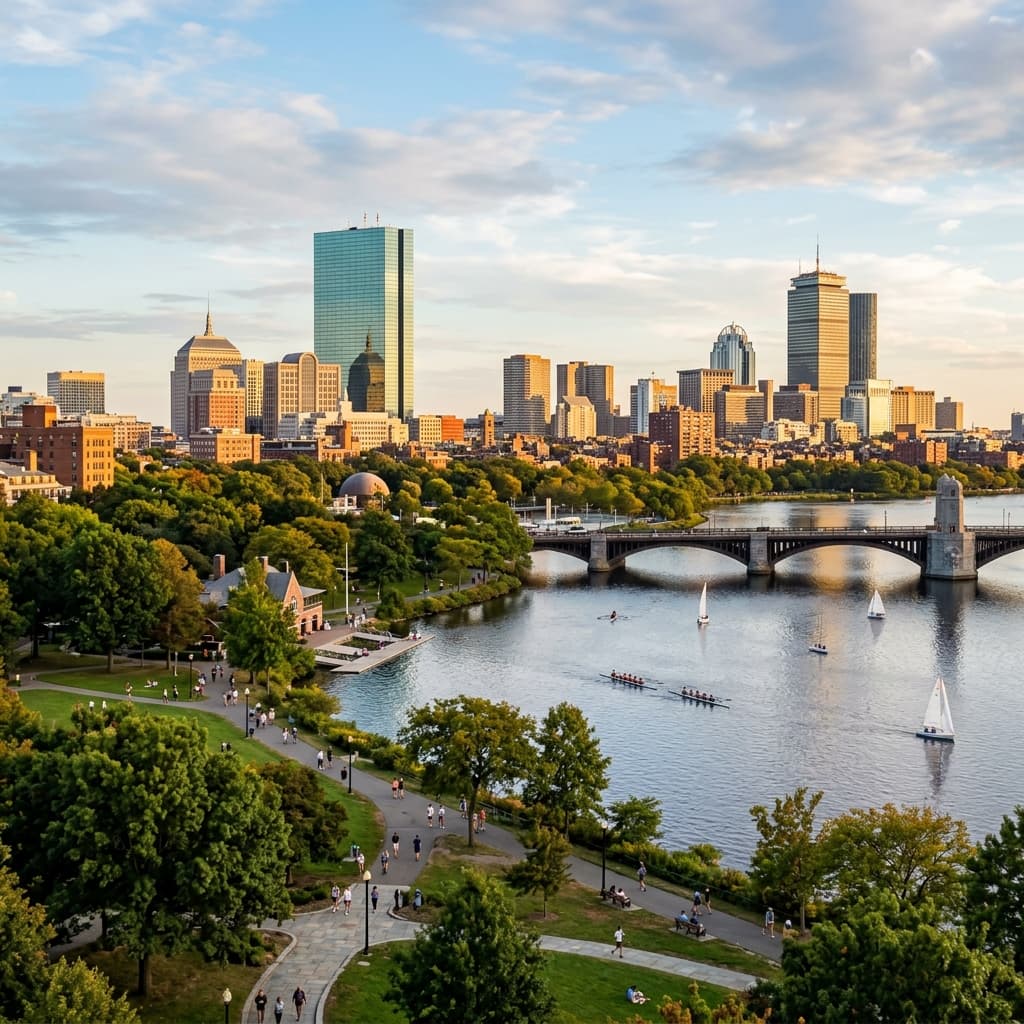
Boston, MA
A major academic hub known for world-class universities and a high concentration of students.
New York, NY
A global center for finance, media, and culture, offering unmatched networking opportunities.
San Francisco / Bay Area, CA
The heart of global tech and innovation, ideal for STEM and business students.
Chicago, IL
A major economic hub in the Midwest known for business, architecture, and cultural diversity.
Los Angeles, CA
A sprawling city offering strong programs in entertainment, arts, and engineering.
Austin, TX
A rapidly growing tech hub with a vibrant music scene and relatively affordable living.
Work Rules for F-1 Students
On-campus employment
Generally up to 20 hours per week while school is in session, Conditions apply
Scheduled breaks
Eligible on-campus work may be full-time during qualifying school breaks, subject to applicable rules
CPT
Curricular Practical Training must be related to the major and authorized before work begins
OPT and STEM OPT
Temporary practical training related to the field of study. Eligibility, authorization and reporting rules apply. STEM extension is conditional
Employment is restricted under F-1 rules. Never begin off-campus work without the required authorization. Confirm your circumstances with your DSO and current official guidance.
Student Support, Health Insurance and School Verification
SEVP certification
The school must be authorized to enroll eligible F/M international students and issue the relevant Form I-20
Academic accreditation
Accreditation and SEVP certification answer different questions. Students should review both
Health insurance
Requirements and coverage vary by institution. Many schools require enrollment in or an approved waiver from a student plan
International student support
DSOs and international student offices help students understand status-related school processes and available support
SEVP certification permits eligible student enrollment; it is not an academic ranking or guarantee of program quality.
Post-Study Options
Working after graduation is a great way to gain experience.
Important Notice
Rules change. Check official sites.
Frequently Asked Questions
Essential information for Bangladeshi students planning to study in the USA.
Can Bangladeshi students study in the USA?
What qualifications are normally required?
Which English tests may be accepted?
Are SAT/ACT or GRE/GMAT mandatory?
What are the main intakes?
Can international students work while studying?
What is an I-20?
Are scholarships or assistantships available?
How much bank balance is required for a US student visa?
What is OPT?
Check official information
Visa rules, fees and eligibility requirements can change. Confirm the latest information through the official US Government sources below.
Ready to Start?
Speak with an experienced advisor to plan your application.