
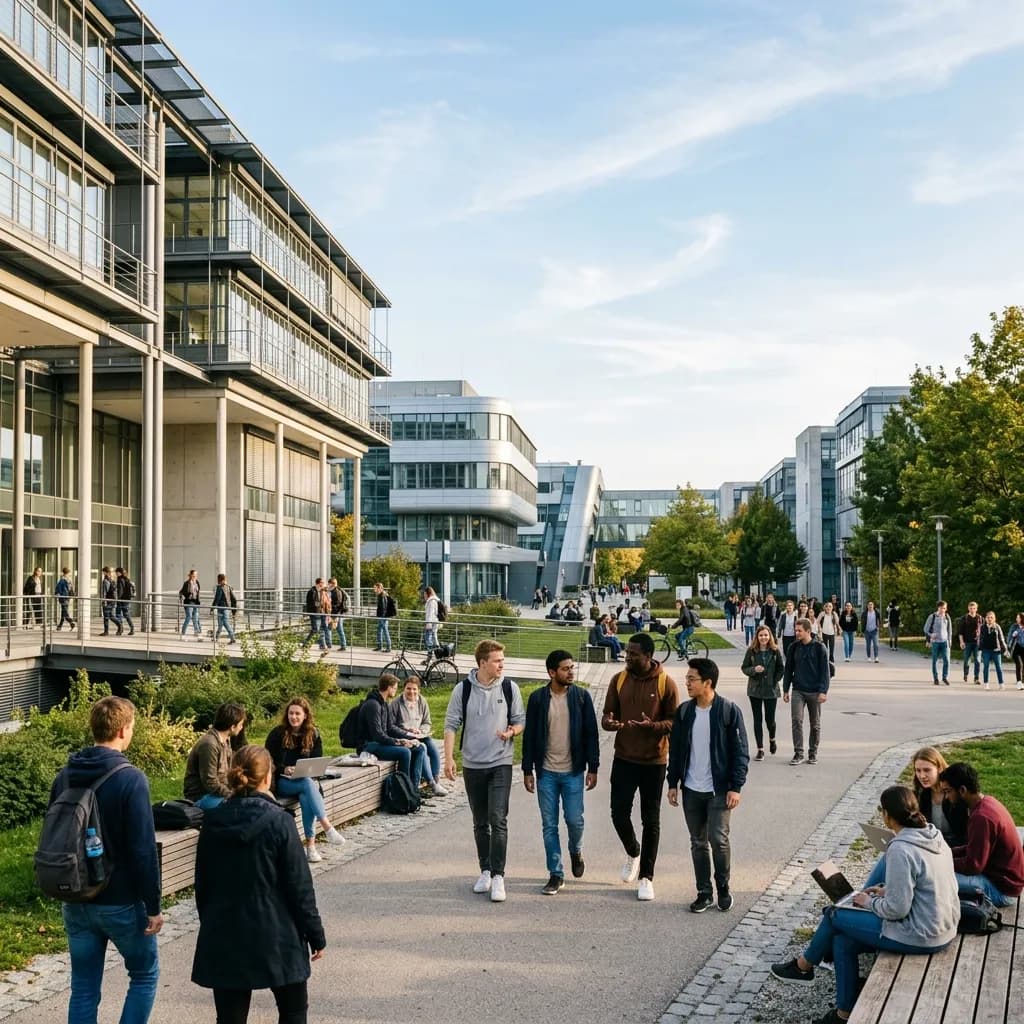
Study in Germany from Bangladesh
Understand HZB and Studienkolleg pathways, university applications, tuition exceptions, scholarships, student work rules and Germany's study-visa process for Bangladeshi applicants.
Explore this guide
Germany at a Glance
Institution Types
Public & Private Universities, UAS (Fachhochschulen)
Teaching Languages
German (majority), English (growing number of programs)
Admission Eligibility
HZB depends on complete academic record
Application Route
Direct, uni-assist, or VPD (varies by university)
Student Work
140 full days or 280 half days per year
Currency
Euro (€)
Decision factors
Evaluate these points before deciding.
This may suit you if...
- Suitable if the applicant can satisfy the specific HZB pathway.
- Suitable if the applicant is prepared for the required teaching language.
- Suitable if the selected institution/program has a financially realistic fee structure.
- Suitable if the applicant can fund living costs without depending on student work.
- Suitable if the applicant is prepared for housing searches and administrative procedures.
Pause and compare if...
- Pause if the chosen qualification does not provide direct entry.
- Pause if the applicant cannot meet the program's German-language requirement.
- Pause if the applicant assumes every public university is without tuition.
- Pause if the applicant is relying on part-time income for visa finance.
- Pause if the applicant has not checked whether the profession is regulated.
Decision factors
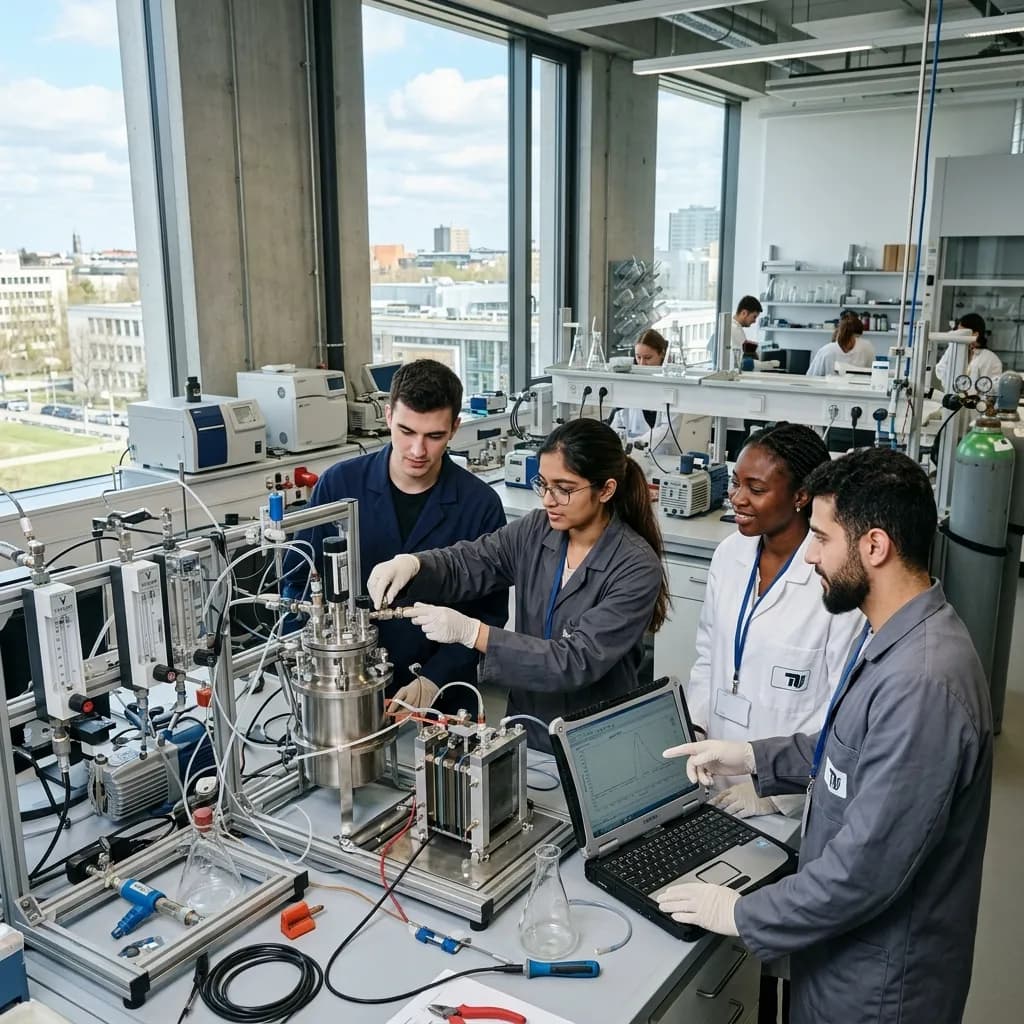
Evaluate these factors carefully
HZB Eligibility
Bachelor's eligibility depends on whether the applicant's complete academic record establishes a recognised higher-education entrance qualification (HZB).
Application Routes
Some universities accept direct applications, some use uni-assist, and some require a VPD before applying.
Language
While English programs exist, teaching language and professional recognition are especially important in regulated fields.
Cost Planning
Public universities generally do not charge tuition, but semester contributions, exceptions (like Baden-Württemberg), and living costs apply.
Financial Proof
A blocked account (currently €11,904) is a common visa requirement, but it does not guarantee all your actual costs will be covered.
Schengen Area
A valid residence permit normally supports short visits (90 days in 180) within Schengen, but does not create a right to study/work elsewhere.
Popular Study Areas
Engineering & Technology
Mechanical, Electrical, Automotive, and Automation Engineering.
Computer Science
Software Engineering, AI, Data Science, and Cybersecurity.
Business & Management
Business Administration, International Management, and Economics.
Natural Sciences
Physics, Chemistry, Biology, and Environmental Sciences.
Medicine & Health
Medicine, Dentistry, Pharmacy. (Regulated - verify teaching language and recognition).
Architecture
Urban Planning, Architecture. (Regulated profession).
Renewable Energy
Sustainable Technologies.
Social Sciences
Sociology, Political Science.
Arts & Humanities
History, Philosophy, Linguistics.
Law
Various legal fields. (German state examination required for full practice).
Regulated Professions Warning
Teaching language and professional recognition are especially important in medicine, dentistry, pharmacy, law, teaching, architecture and other regulated fields. Many programs leading to German state examinations are taught primarily in German. An English-taught degree does not automatically establish eligibility to practise a regulated profession.
Document Checklist
Check specific university requirements.
Identity
- Valid passport
- Visa application materials required by the current Embassy checklist
- Biometric photographs where requested
Academic
- School certificates and mark sheets
- Degree certificates and transcripts for graduate admission
- Proof relevant to the applicant's HZB pathway
- Certified copies/translations where required
Program-specific
- Language evidence accepted by the university
- CV
- Motivation letter
- References, portfolio, aptitude test or work evidence where required
Application-route
- uni-assist documents only where applicable
- VPD only where the university requires it
- Direct university application documents where applicable
Visa/Finance
- Admission or relevant application status required by the visa category
- Accepted proof of finance
- Health-insurance evidence
- Accommodation or other supporting information only where required by the current checklist
Intakes and Deadlines
Deadlines vary by university.
Winter Semester
- The broader intake for most programs.
- Universities, programs, applicant groups and Studienkollegs can set earlier or different deadlines.
Summer Semester
- Has fewer available programs.
- Verify the exact date before preparing your timeline.
Private Universities
- Not all private universities offer rolling admission; check specifically.
Studienkolleg
- Studienkolleg deadlines and entrance examinations are separate.
Estimated Costs
Public universities charge a semester contribution rather than tuition, though exceptions (like Baden-Württemberg) exist. All figures are estimates.
Semester contribution
Public-university tuition
Private institutions
Visa financial proof (Blocked Account)
Scholarships for Germany
Scholarships are highly competitive. Check active official guidelines for eligibility and coverage.
DAAD Scholarships
DAAD maintains a searchable scholarship database covering different levels, subjects and applicant groups. Many prominent opportunities focus on postgraduate study, research or development-related programs, but applicants must check the criteria of the individual award.
Deutschlandstipendium
Participating universities award the Deutschlandstipendium. It currently provides €300 monthly, funded jointly by public and private sources. Availability, application timing and selection are managed by the participating institution.
Erasmus+
Erasmus+ commonly supports eligible mobility or joint-program participation through participating institutions. It is not a general scholarship for every student starting a complete degree independently in Germany.
Talent-funding foundations
Political, trade-union, business-linked and religious foundations may support international students. Selection can consider academic performance, social engagement, values alignment, language and program stage. Conditions differ substantially.
Are you eligible for a scholarship?
Use our Scholarship Checker to find funding opportunities matching your academic profile.
Turn your academic profile into a realistic Germany shortlist
This is a starting point, not a ranking. Verify the exact program, admission route, language, tuition, semester contribution and eligibility through official university sources.
Technical University of Munich (TUM)
Check tuition requirements for non-EU students
Ludwig Maximilian University of Munich (LMU)
Programs to investigate: Humanities, Sciences
Heidelberg University
Programs to investigate: Life Sciences, Arts
RWTH Aachen University
Example subject areas: Engineering, Technology
Technical University of Berlin (TU Berlin)
Example subject areas: Architecture, IT
Karlsruhe Institute of Technology (KIT)
Example subject areas: Computer Science
Humboldt University of Berlin
Programs to investigate: Arts, Social Sciences
Freie Universität of Berlin (FU Berlin)
Example subject areas: Humanities
University of Stuttgart
Example subject areas: Manufacturing
Frankfurt School of Finance & Management
Private institution; verify fee levels directly
Find Your Ideal Program
Use the Higher Education Compass to find all accredited degree programs offered by German higher education institutions.
Student Cities in Germany
Germany's diverse cities offer different lifestyles, living costs, and opportunities.
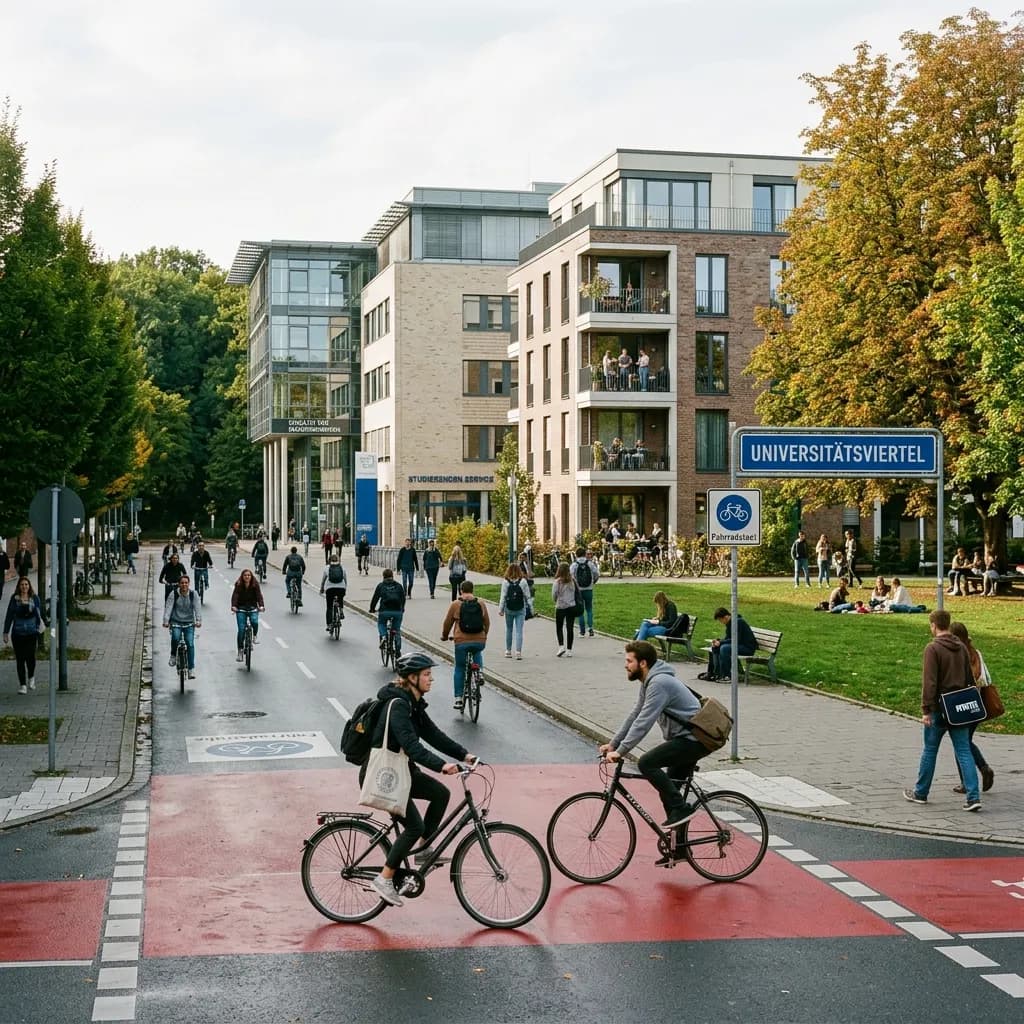
Berlin
Large and diverse academic ecosystem with several universities and extensive cultural activity. Housing can be difficult and costly, so applicants should begin searching early.
Munich
Home to institutions including TUM and LMU and a major technology and research economy. It is also among Germany's more expensive and competitive housing markets.
Aachen
Compact student city centred around RWTH Aachen and engineering-related study. Verify accommodation availability and cross-border transport options.
Heidelberg
Historic university city with a strong research and life-sciences environment. Its popularity and limited housing can create accommodation pressure.
Hamburg
Large port city with broad university options, media, logistics and research activity. Rent and commuting distance should be included in the budget.
Leipzig
Growing student city with universities, arts and research institutions. Costs may differ from larger western and southern hubs, but affordability must be checked against current rent.
Part-Time Work Rules
Annual-day model
Third-country students may generally work up to 140 full days or 280 half days in a calendar year.
Weekly model
Alternatively, they may work up to 20 hours per week during the lecture period. Different rules apply during semester breaks.
Student auxiliary work
Official guidance states that the 140/280 restrictions do not apply to student auxiliary tasks. Still, confirm reporting conditions.
Self-employment
Self-employment or independent contracting activity generally requires approval from the responsible foreigners authority.
Warning: Do not depend on employment income to fund the blocked account, tuition or core living costs.
Legal and Social Protections
Employment rights
Student employees should receive clear information about pay, working time, duties and termination conditions. Statutory rules on minimum wage, working time, paid leave and workplace safety may apply. Keep your contract, payslips and working-time records.
Protection from discrimination
Germany's General Equal Treatment Act protects against discrimination in employment and many everyday transactions, including parts of the housing market. The Federal Anti-Discrimination Agency provides confidential counselling.
Housing and deposits
Read the tenancy agreement before paying. Confirm the landlord, document the condition of the room during handover, obtain receipts and be cautious about advance-payment requests. Local Studierendenwerke can direct students to housing advice.
Health and social advice
Students must prove recognised health and long-term-care insurance for enrolment. Public or private arrangements may apply depending on status. Local Studierendenwerke often provide advice about insurance, finances, housing and social support.
Understanding your rights and support systems.
After graduation: residence and work pathways
Graduates of German higher-education institutions may apply for a residence permit for up to 18 months to seek qualified employment. Eligibility and application requirements must be confirmed with the responsible foreigners authority.
Official guidance allows graduates to undertake employment to support themselves during this job-search period. The status should not be described as an automatic permanent work visa.
After obtaining suitable qualified employment, the graduate may qualify for an employment residence permit or, where all salary and occupational conditions are met, an EU Blue Card.
Graduates of German higher-education institutions may have a reduced settlement-permit pathway after more than two years of qualifying employment, but it is not automatic. The applicant must satisfy the applicable residence, employment, pension-contribution, language and other statutory conditions.
Important
Rules may change. Confirm criteria directly.
Frequently Asked Questions
Essential information for Bangladeshi students planning to study in Germany.
Is public university education always without tuition?
Do Bangladeshi applicants need an APS certificate?
Does HSC automatically require Studienkolleg?
How do I verify HZB?
Does every university use uni-assist?
Is a VPD an admission offer?
Is a blocked account the only financial-proof method?
What amount should I transfer?
Can I fund my studies through part-time work?
How do the 140/280 and 20-hour rules relate?
Is statutory insurance the only possible insurance?
Can a student residence permit be used to work elsewhere in Europe?
Is the 18-month permit automatic?
Does two years of employment guarantee permanent residence?
How early should I search for housing?
Check official information
Study visa rules, scholarship eligibility, and requirements can change. Confirm the latest information through official sources below.
Ready to Start?
Book a consultation to discuss your Germany study plans.